What Is the Difference Between a Gang Tool Lathe and a Turret Lathe?
In CNC machining, both gang tool lathes and turret lathes are widely used for turning operations. While they perform similar machining functions—such as turning, drilling, and threading—their tooling structure, efficiency, and application scenarios differ significantly. Understanding these differences helps manufacturers select the most suitable machine for their production requirements.
What Is a Gang Tool Lathe?
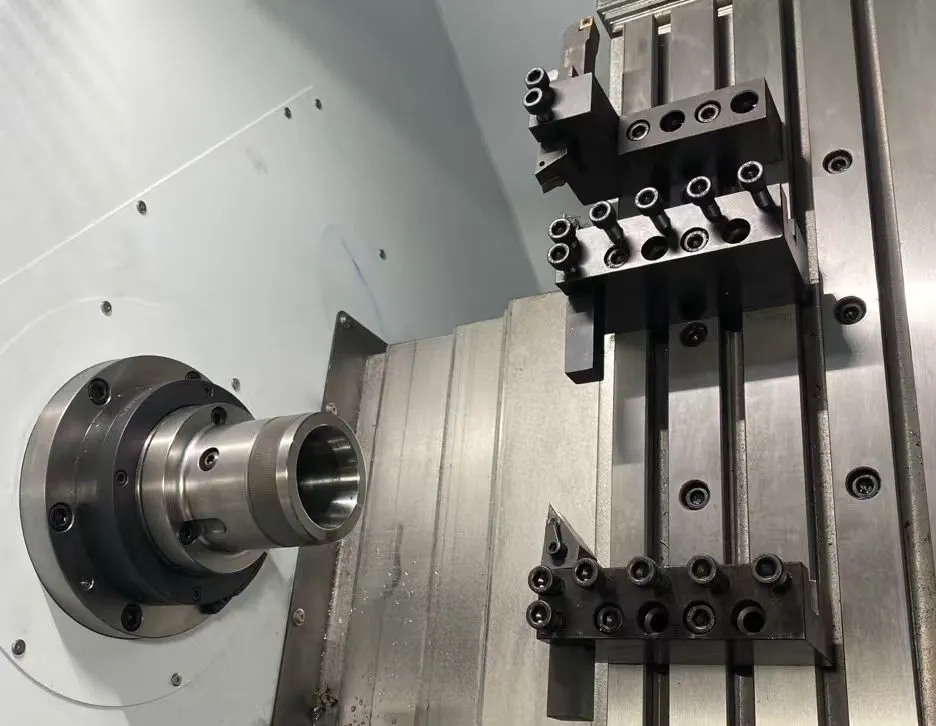
A gang tool lathe is a type of CNC lathe that uses a linear tool arrangement on a fixed tool plate. Multiple cutting tools are mounted in a row (or “gang”) on the cross-slide. The machine moves the slide to position the required tool for machining.
Key Characteristics
Tools are arranged in a straight line on a gang plate
Tool changes occur through axis movement instead of turret rotation
Designed for high-speed and small-part machining
Compact structure with fast cycle times
Advantages
Faster tool changes due to the absence of turret indexing
High rigidity because of the simple structure
Ideal for small precision components
Lower mechanical complexity and maintenance
Typical Applications
Gang tool lathes are commonly used for:
Electronics components
Small shafts and pins
Automotive fasteners
Medical device parts
Precision metal fittings
What Is a Turret Lathe?
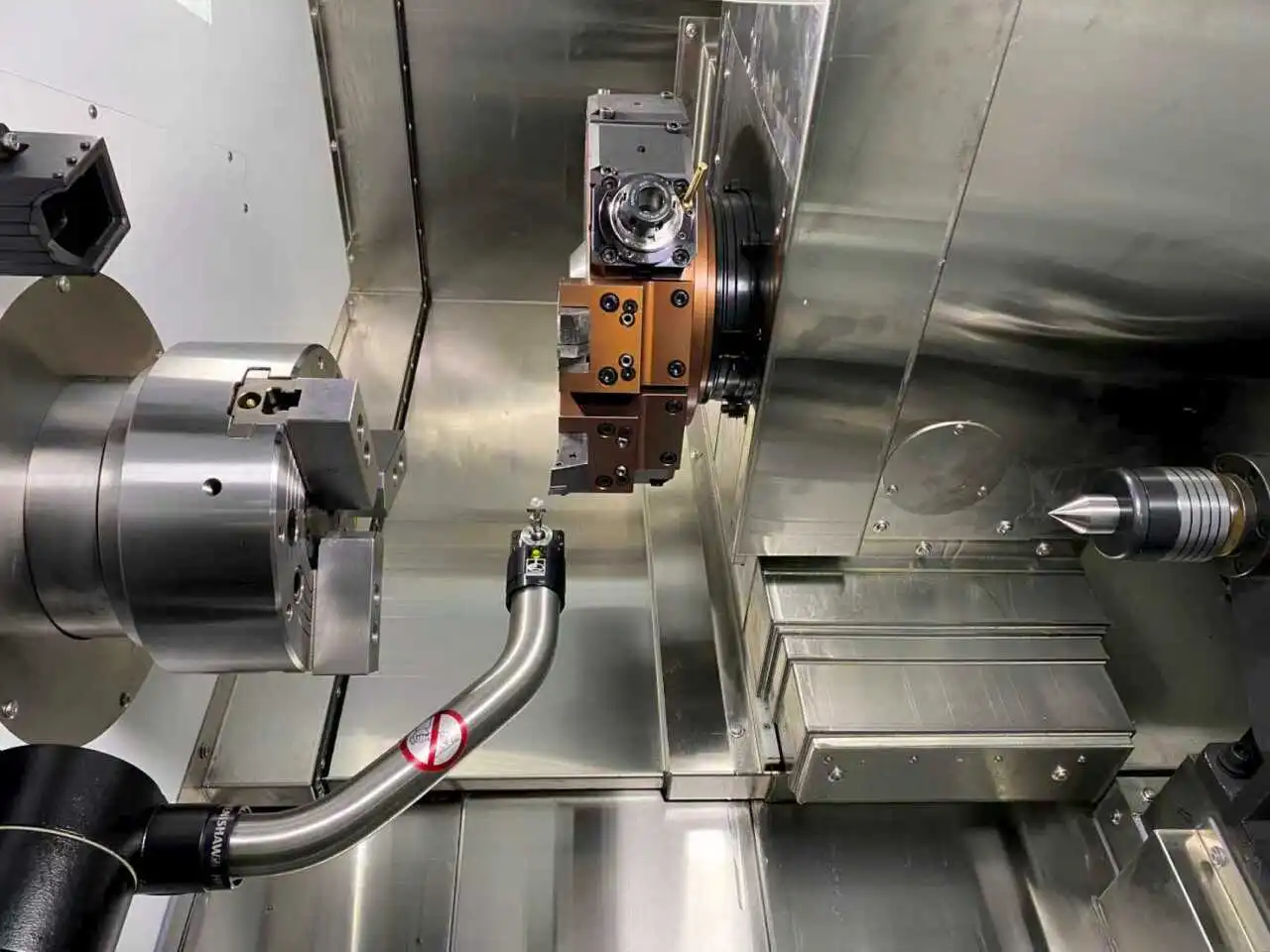
A turret lathe uses a rotating turret that holds multiple cutting tools. The turret automatically indexes to bring the next tool into position during machining.
Key Characteristics
Multi-station rotating turret tool holder
Automatic tool indexing system
Supports more complex machining operations
Suitable for medium to large parts
Advantages
Can hold more tools simultaneously
Suitable for complex machining sequences
Flexible for different machining processes
Supports live tooling and milling operations on some models
Typical Applications
Turret lathes are commonly used in:
Automotive parts manufacturing
Aerospace components
Hydraulic fittings
Heavy machinery parts
Large precision shafts
Structural Differences
| Feature | Gang Tool Lathe | Turret Lathe |
|---|---|---|
| Tool arrangement | Linear gang plate | Rotating turret |
| Tool change method | Axis movement | Turret indexing |
| Tool change speed | Very fast | Moderate |
| Machine structure | Simple | More complex |
| Best for | Small precision parts | Complex multi-process parts |
Production Efficiency Comparison
Gang tool lathes are known for extremely fast cycle times because there is no turret rotation. This makes them ideal for mass production of small parts.
Turret lathes, however, provide greater machining flexibility, allowing more operations to be performed in a single setup.
When to Use a Gang Tool Lathe
Choose a gang tool lathe if you need:
High-volume production
Short cycle times
Small diameter parts
Simple turning operations
When to Use a Turret Lathe
Choose a turret lathe if you need:
Complex machining operations
Multiple tooling options
Larger workpieces
More flexible machining capabilities

Cost and Maintenance Differences
Another important consideration is cost and maintenance.
Gang Tool Lathe
Lower machine cost
Simpler mechanical design
Easier maintenance
Turret Lathe
Higher machine cost
More complex mechanical system
Requires periodic turret maintenance
Which One Is Better for Your Application?
The choice between a gang tool lathe and a turret lathe depends largely on production requirements.
For high-speed manufacturing of small precision parts, gang tool lathes are usually the better option.
For complex machining operations requiring multiple tools, turret lathes provide greater flexibility.
Manufacturers often use both machine types in their production lines to optimize efficiency for different types of components.


Comments
Post a Comment