CNC Turning vs Custom CNC Lathe Machining: What’s the Difference?
In precision manufacturing, the terms CNC turning and custom CNC lathe machining are often used interchangeably. However, they actually refer to different scopes of production capability, customization level, and application focus.
Understanding the difference is essential for engineers, procurement managers, and manufacturers when selecting the right machining solution for cost efficiency, accuracy, and production scale.
1. What Is CNC Turning?
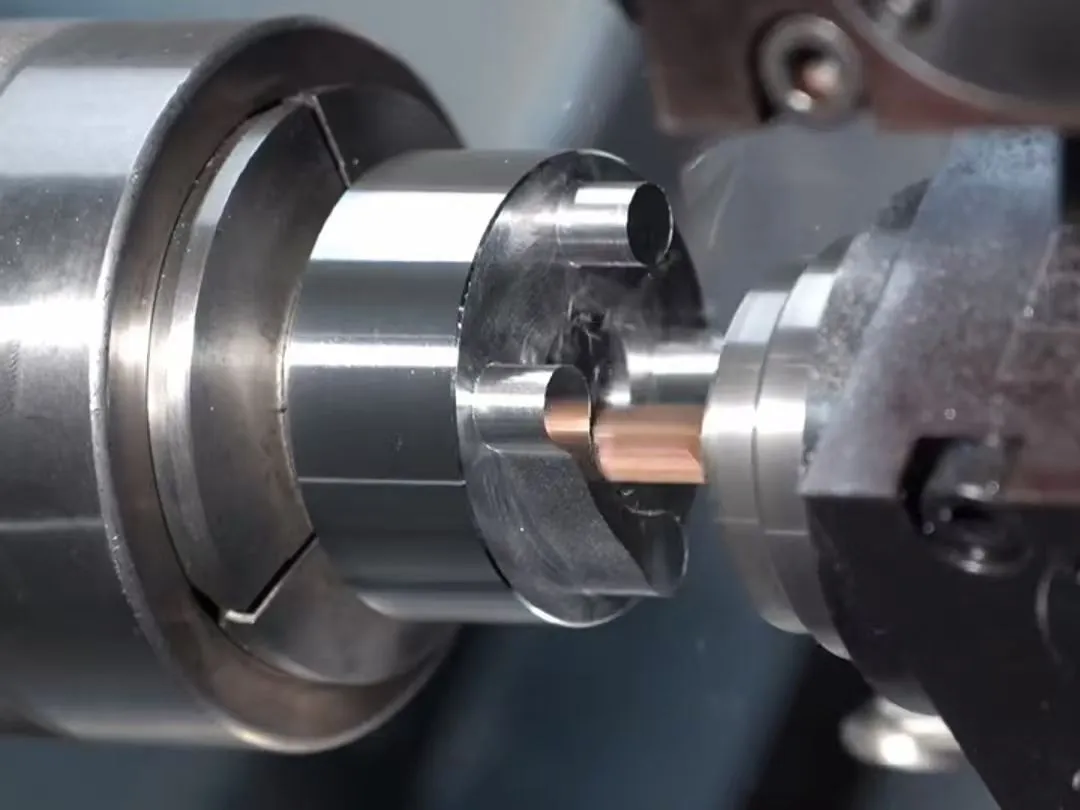
CNC turning is a machining process where a rotating workpiece is shaped using cutting tools on a CNC lathe.
In this process:
The workpiece rotates at high speed
A stationary cutting tool removes material
The machine follows programmed tool paths
Typical CNC turning operations include:
External turning
Internal boring
Facing
Grooving
Threading
Taper turning
CNC turning is primarily defined by the process itself, not the machine type or customization level.
2. What Is Custom CNC Lathe Machining?
Custom CNC lathe machining refers to a broader manufacturing service where parts are produced using CNC lathes based on customer-specific requirements.
It includes:
Custom-designed components
Non-standard geometries
Tight tolerance specifications
Material selection flexibility
Prototype or low-to-high volume production
Unlike standard CNC turning (which describes a machining method), custom CNC lathe machining focuses on tailored production solutions.
3. Key Difference: Process vs Service Scope
Aspect | CNC Turning | Custom CNC Lathe Machining |
Definition | Machining process | Customized manufacturing service |
Focus | How the part is cut | What the part should become |
Scope | Standard operations | Full product customization |
Output | General turned parts | Application-specific components |
Flexibility | Limited to programmed turning | High design and material flexibility |
CNC turning is the method, while custom CNC lathe machining is the solution-oriented service built around that method.
4. Equipment Perspective: Standard vs Advanced CNC Lathes
CNC turning can be performed on various machines, such as:
Basic CNC turning centers
Swiss-type lathes
Gang tool lathes
Turret CNC lathes
Custom CNC lathe machining often requires more advanced setups, including:
Multi-axis CNC systems
Live tooling lathes
High-precision servo control machines
Automated bar feeding systems
This allows manufacturers to handle complex geometries and tight tolerances.
5. Application Differences
CNC Turning Applications:
Standard shafts
Bushings
Simple cylindrical parts
Mass-produced mechanical components
It is ideal for repeatable, standardized production.
Custom CNC Lathe Machining Applications:
Aerospace precision parts
Medical implants and devices
Automotive custom components
Hydraulic system parts
Prototyping and R&D projects
It is used when standard parts cannot meet functional or dimensional requirements.
6. Production Flexibility and Customization Level
CNC turning is typically optimized for:
High-volume production
Stable and repeatable geometry
Minimal design variation
Custom CNC lathe machining allows:
Rapid design changes
Complex geometry production
Small-batch or one-off manufacturing
Engineering collaboration during production
This makes it more suitable for modern product development cycles.
7. Cost Structure Differences
CNC Turning:
Lower per-part cost in bulk production
Efficient cycle times
Minimal engineering involvement
Custom CNC Lathe Machining:
Higher initial engineering cost
More setup and programming time
Flexible pricing depending on complexity
However, custom machining reduces risk of redesign failure and improves functional performance.
8. Which One Should You Choose?
Choose CNC turning if:
You need standard parts in large quantities
Cost efficiency is the top priority
Design is already finalized and stable
Choose custom CNC lathe machining if:
Your part has complex geometry
You require tight tolerances or special materials
You are in prototyping or product development stage
Standard components cannot meet performance needs
Conclusion
While CNC turning refers to the machining process of shaping rotating parts, custom CNC lathe machining represents a full-service manufacturing approach tailored to specific engineering requirements.
In modern precision manufacturing, both play essential roles:
CNC turning ensures efficiency and scalability
Custom CNC lathe machining ensures innovation and adaptability
Understanding the difference helps manufacturers and buyers select the right solution to balance cost, performance, and production efficiency.


Comments
Post a Comment